
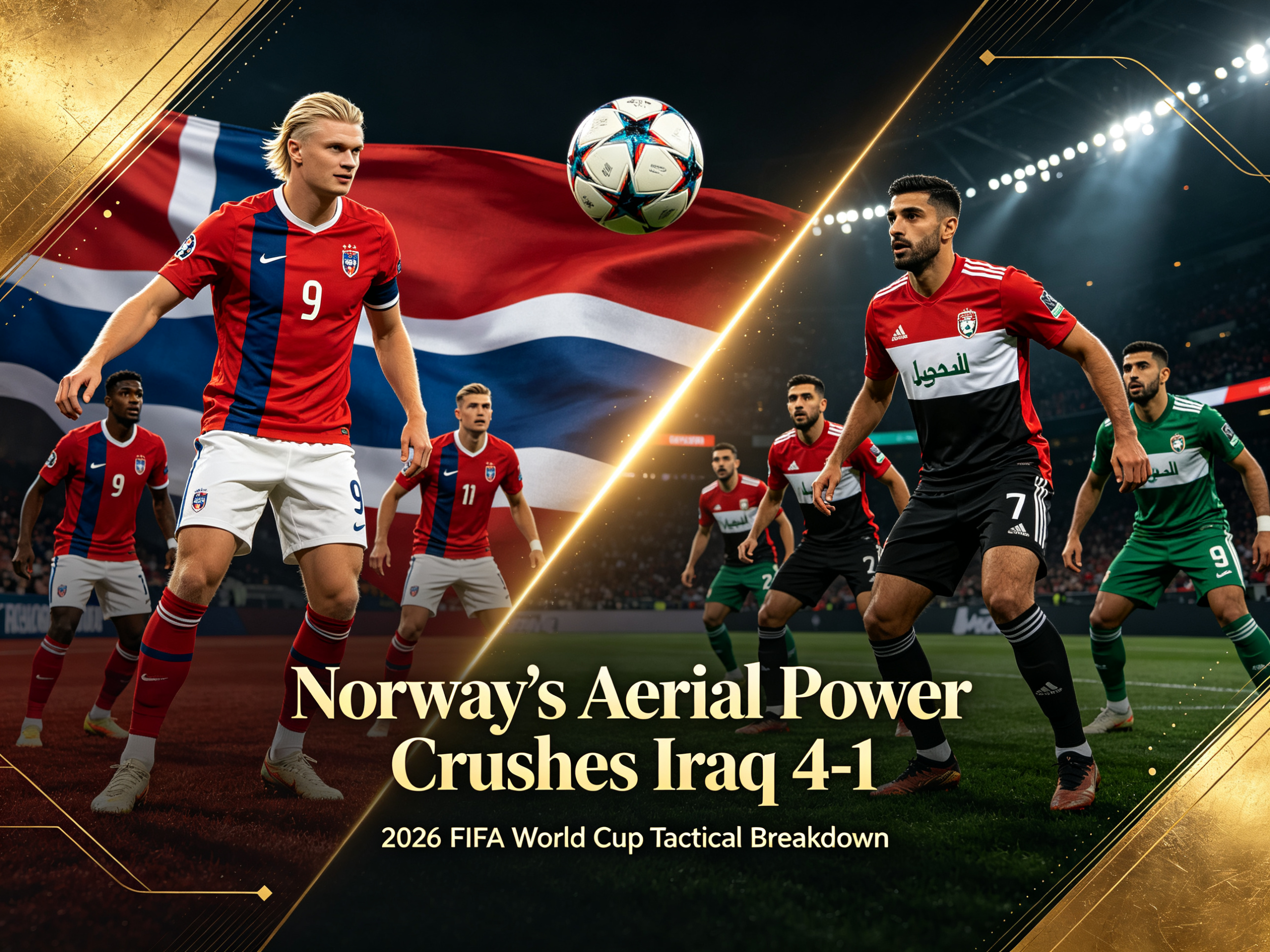
Norway’s Aerial Power Crushes Iraq 4-1
Physical dominance, high crosses, and structured attacking layers dismantle Iraq in a one-sided World Cup clash.
Match Overview: Why Norway Controlled the Game
This Norway vs Iraq tactical analysis highlights how physical dominance and aerial superiority shaped a decisive 4-1 victory. Norway used structured wide attacks and constant box pressure to overwhelm Iraq’s defensive system.
From the opening minutes, Norway imposed their physical presence, forcing Iraq into deeper defensive positioning and limiting their ability to build structured counterattacks. The match quickly evolved into a demonstration of how aerial dominance and relentless attacking pressure can dictate every phase of a World Cup contest.
How Norway Built the Aerial Bombardment
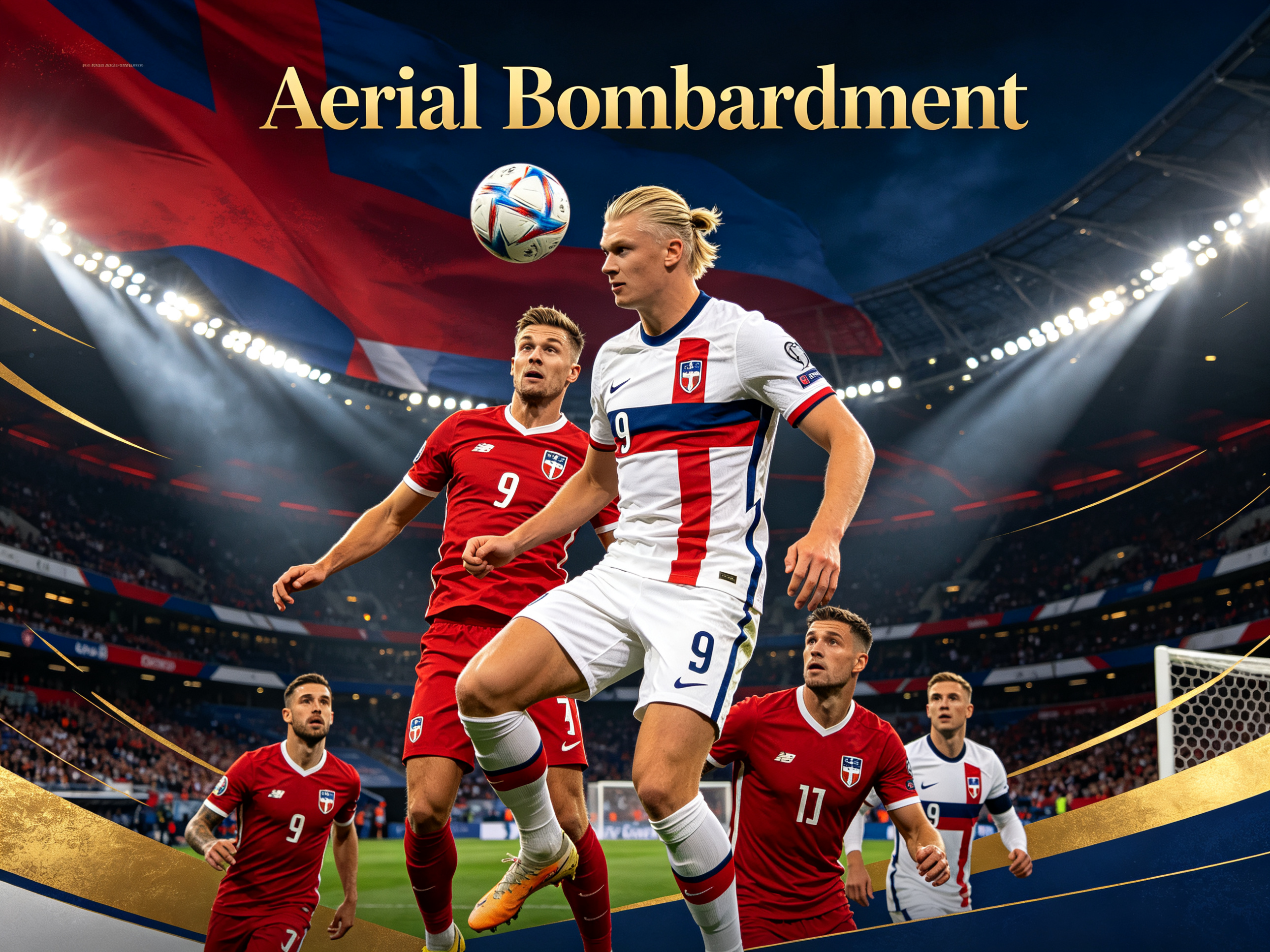
Norway’s tactical identity revolved around high crosses, aggressive wing play, and penalty-box occupation. Full-backs pushed high, wingers stretched the pitch, and multiple attackers attacked every delivery.
This approach created constant aerial duels where Norway’s height and strength advantage repeatedly became decisive. Every crossing sequence forced Iraq’s defenders into difficult situations, increasing defensive errors and opening additional scoring opportunities.
Why Iraq Struggled Defensively
Iraq initially maintained defensive organization, but sustained crossing pressure gradually broke their rhythm. Every clearance was met by another Norwegian attack, preventing any meaningful reset.
As fatigue accumulated, spacing between defenders widened. Norway identified these gaps and repeatedly exploited them through wide combinations, second-ball recoveries, and intelligent movement inside the box.
Second Balls Changed the Match

Beyond aerial duels, Norway dominated second-ball situations throughout the match. Every clearance or blocked cross frequently landed at the feet of a Norwegian midfielder, allowing attacks to continue without interruption.
This territorial control prevented Iraq from launching effective transitions and ensured Norway maintained overwhelming attacking momentum.
Why This Was More Than Just Crossing
Although aerial superiority defined the game, Norway’s attack was far from predictable. The team mixed direct crosses with quick combinations, cutbacks, overlapping runs, and long-range attempts.
This multi-layered attacking structure made defensive preparation extremely difficult and prevented Iraq from focusing on a single threat.
Norway Tactical Strengths
- Elite aerial dominance inside both penalty areas.
- High-volume crossing strategy executed with consistency.
- Excellent second-ball recovery.
- Physical superiority across the pitch.
- Effective use of width and overlapping runs.
- Strong set-piece execution.
- Sustained attacking pressure for 90 minutes.
Iraq Positive Takeaways
- Strong defensive discipline during early phases.
- Several promising transition opportunities.
- Competitive mentality despite constant pressure.
- Technical quality in midfield when possession was secured.
- Valuable experience against one of the tournament’s most physical sides.
Related Teams & Collections
Final Verdict
Norway’s 4-1 victory was a complete demonstration of how aerial dominance, physical strength, and structured attacking systems can dismantle a defensive setup. Their ability to repeatedly win aerial duels and second balls ensured continuous pressure throughout the match.
For teams hoping to challenge Norway later in the tournament, finding solutions to their aerial power and territorial control will be essential. If Norway continue performing at this level, they will remain one of the most dangerous tactical forces in the competition.