
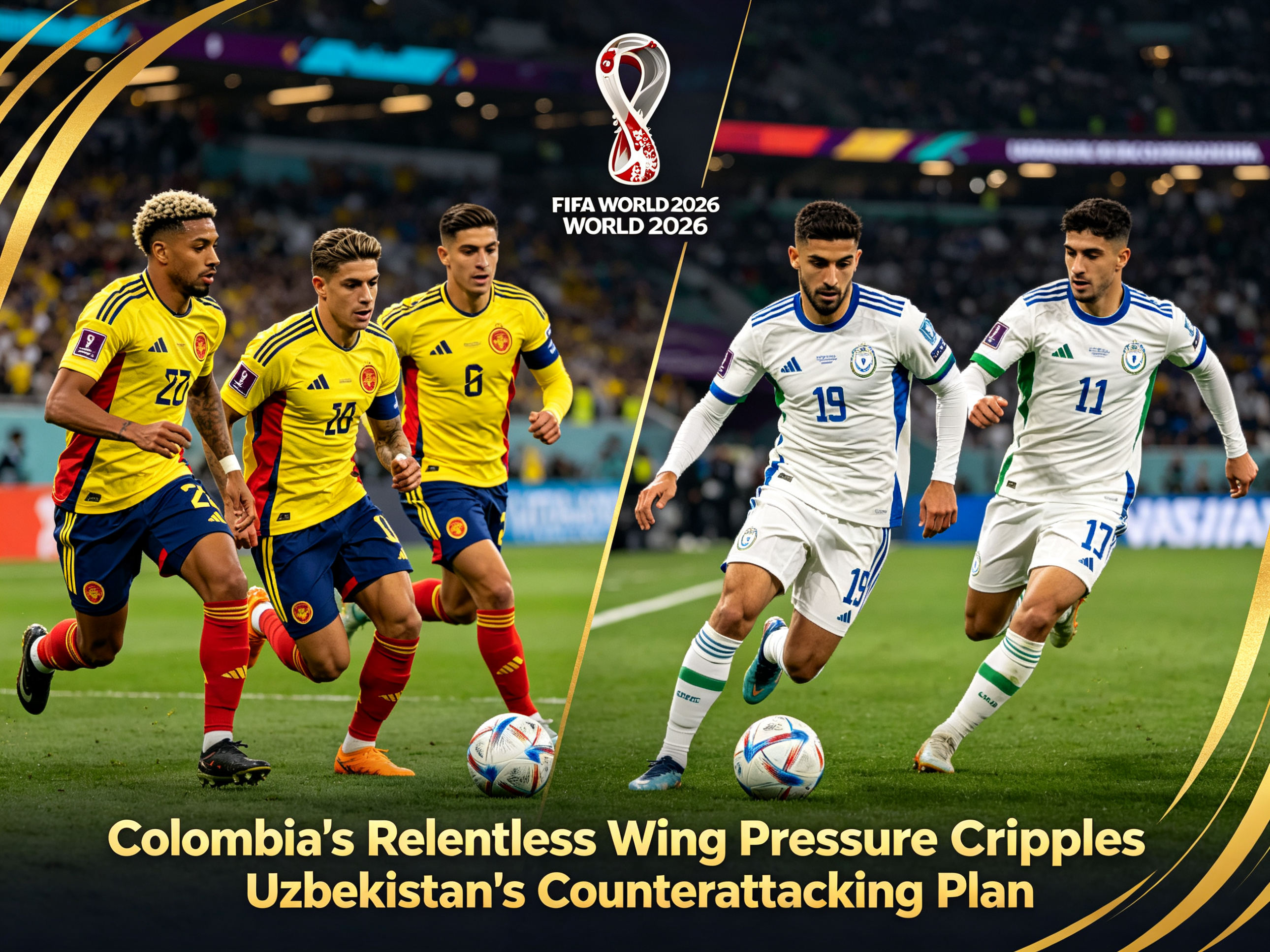
Colombia's Relentless Wing Pressure Cripples Uzbekistan's Counterattacking Plan
Width, intensity, and coordinated pressing turned the flanks into Colombia's most dangerous weapon.
Match Overview: How Colombia Took Control Through The Wings

In one of the most tactically fascinating encounters of the tournament, Colombia demonstrated how aggressive wing-oriented football can dismantle a team built around defensive organization and quick transitions. Rather than focusing solely on central possession, Colombia repeatedly attacked wide areas, forcing Uzbekistan into uncomfortable defensive rotations throughout the match.
This Colombia vs Uzbekistan tactical analysis highlights how modern wide pressing systems can simultaneously create attacking opportunities while eliminating the opponent's ability to launch counterattacks. By dominating both touchlines, Colombia effectively controlled the entire rhythm of the game.
Why Uzbekistan's Counterattacking Strategy Never Fully Developed
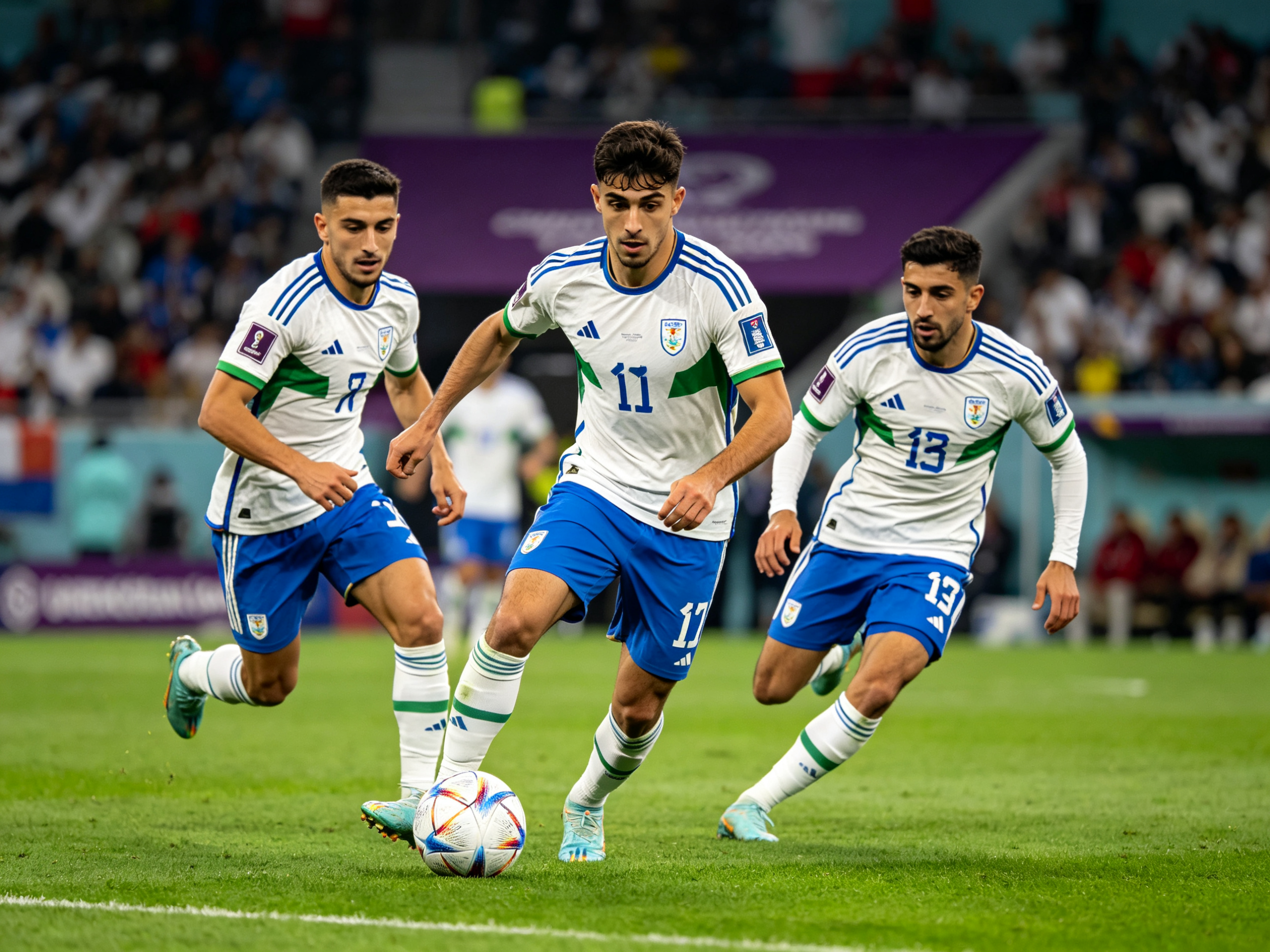
Uzbekistan entered the match with a clear tactical objective: remain compact defensively, absorb pressure, and exploit open space during transitions. The strategy had worked successfully in previous matches thanks to disciplined defensive positioning and rapid forward breaks.
However, Colombia's aggressive wing pressure prevented those transitions from materializing. Every recovery by Uzbekistan immediately triggered a coordinated press from nearby Colombian players, reducing both time and space on the ball.
As a result, Uzbekistan struggled to move possession beyond midfield and rarely managed to create sustained attacking sequences.
The Tactical Chain Behind Colombia's Wing Dominance
How The Two-Flank Assault Stretched The Defensive Block
Colombia's attacking structure relied heavily on width. Both full-backs pushed high, while wingers remained wide to force Uzbekistan's defensive line into constant horizontal movement.
This stretching effect gradually created gaps between defenders and midfielders. Once those gaps appeared, Colombia's creative players attacked the half-spaces with quick combinations and vertical passes.
The constant switching of play from one flank to the other prevented Uzbekistan from maintaining defensive balance for long periods.
Key Players Behind Colombia's Wing-Based System
Luis Díaz
Provided explosive dribbling and relentless pressure along the left flank.
Jhon Arias
Created width and delivered dangerous final-third actions.
James Rodríguez
Directed attacking patterns and exploited spaces created by wide overloads.
Richard Ríos
Balanced midfield control with aggressive ball recovery.
Daniel Muñoz
Added attacking support from full-back positions and sustained pressure.
Jhon Durán
Occupied central defenders and opened channels for supporting runners.
Why Counter-Pressing Was Just As Important As Attacking
One of the most impressive aspects of Colombia's performance was their ability to immediately recover possession after losing it. Every attacking sequence was supported by nearby midfielders and defenders positioned to launch an instant counter-press.
This meant Uzbekistan rarely had the opportunity to execute clean transitions. Instead of attacking open space, they were repeatedly forced into rushed clearances and defensive survival mode.
The Battle For The Half-Spaces
Although the match appeared to be dominated by wing play, the real damage occurred inside the half-spaces. Colombia used wide overloads to pull defenders outward before attacking the channels between center-backs and full-backs.
These zones became the primary source of dangerous chances, demonstrating how width often serves as a tool for unlocking central penetration.
Tactical Lessons From The Match
- Wing pressure can simultaneously serve attacking and defensive purposes.
- Counter-pressing remains one of football's most effective transition weapons.
- Wide overloads create valuable central spaces.
- Horizontal defensive stretching leads to structural weaknesses.
- High-intensity pressing can neutralize counterattacking teams.
- Modern attacking systems rely heavily on coordinated movement.
- Territorial dominance often begins on the flanks.
Related National Team Collections
Final Verdict
Colombia's victory showcased how elite wing play can shape every aspect of a football match. Their combination of aggressive wide attacks, intelligent positional rotations, and relentless counter-pressing prevented Uzbekistan from executing their preferred defensive-transition strategy.
By transforming the flanks into permanent pressure zones, Colombia controlled territory, tempo, and momentum. The result was a tactical masterclass demonstrating how modern football increasingly rewards teams capable of combining width, intensity, and immediate defensive reactions into a single cohesive system.