
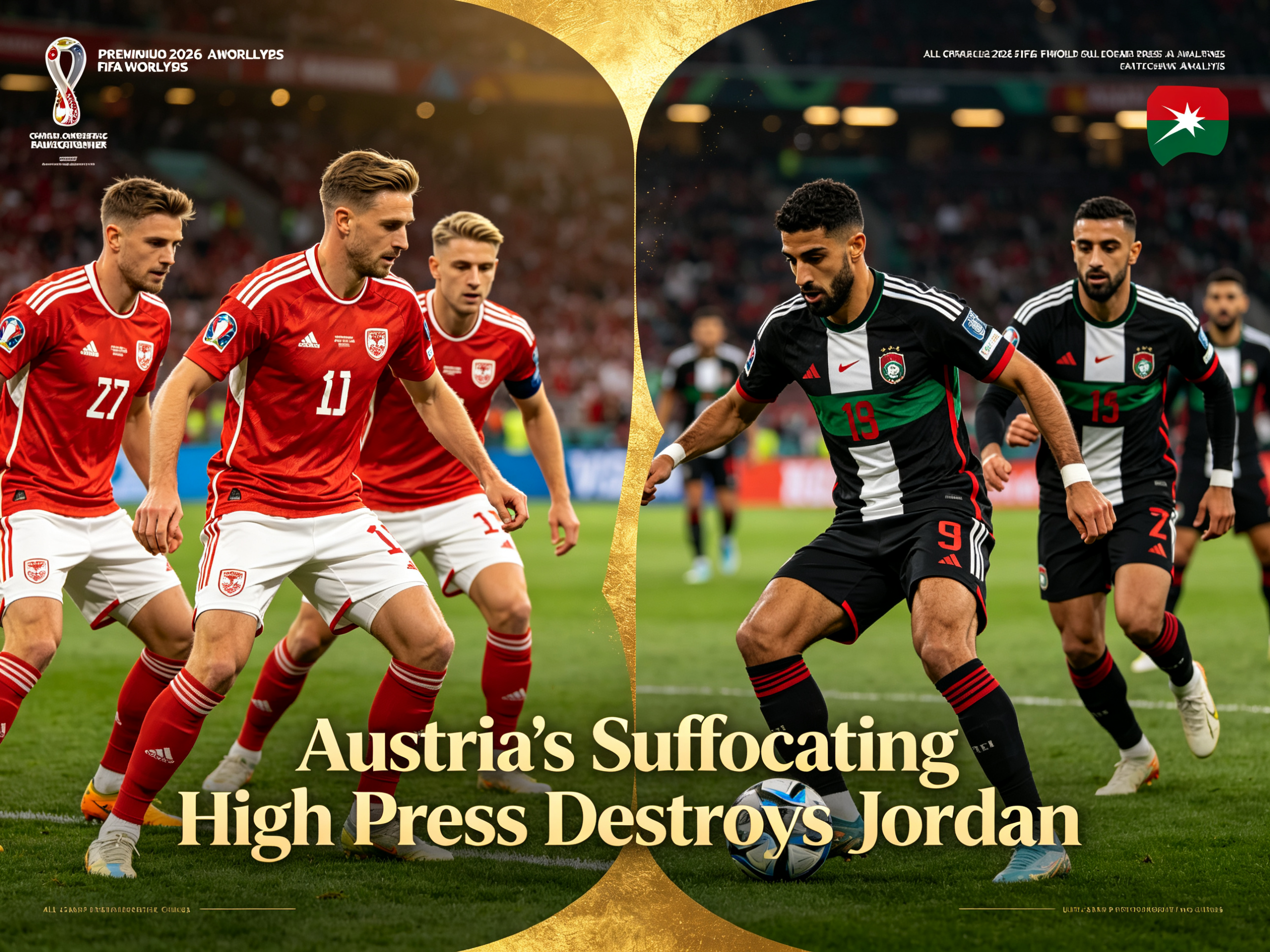
Austria's Suffocating High Press Destroys Jordan's Counterattacking Plan
A tactical masterclass of full-pitch pressure, relentless pressing triggers, and complete territorial dominance.
Match Overview: How Austria Took Control From The First Minute
Austria delivered one of the most aggressive pressing performances of the tournament, overwhelming Jordan through coordinated high-pressure football. Instead of allowing Jordan opportunities to launch their dangerous counterattacks, Austria pushed their defensive line forward and compressed the entire playing area.
This Austria vs Jordan tactical analysis demonstrates how modern high pressing systems can completely neutralize a team built around defensive organization and rapid transitions. Every phase of Jordan's buildup was challenged, forcing rushed decisions and costly turnovers.
Why Austria's High Press Was So Effective
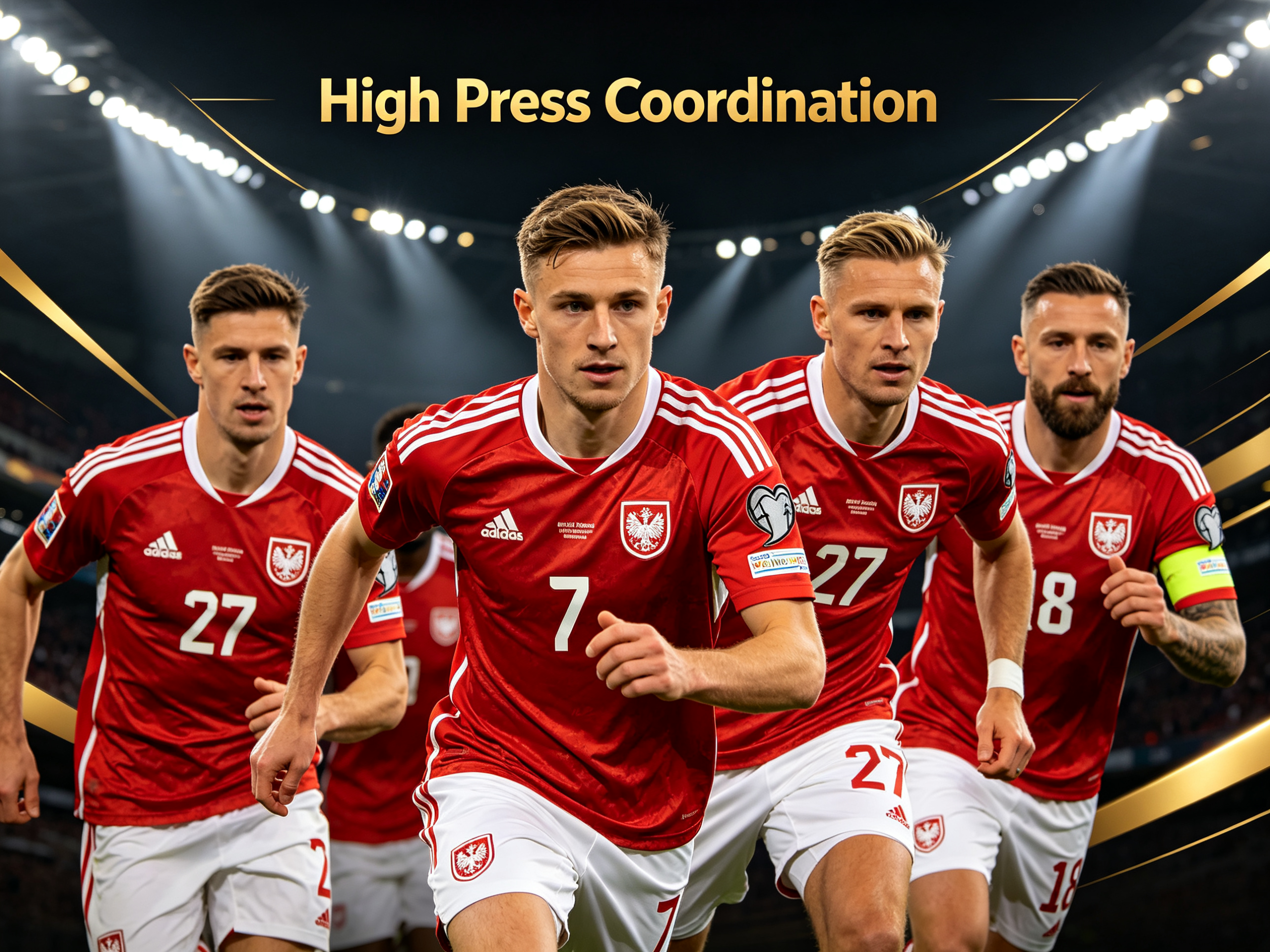
Austria did not simply press individual players. Their entire structure moved as a synchronized unit. The front line initiated pressure while midfielders aggressively closed passing lanes and defenders stepped high to eliminate space between the lines.
This collective movement transformed the match into a series of repeated defensive emergencies for Jordan. Whenever possession changed hands, Austria immediately launched counter-pressing actions designed to recover the ball within seconds.
The Tactical Chain Behind Austria's Dominance
How Jordan's Counterattacking Strategy Was Neutralized
Jordan entered the match hoping to absorb pressure and attack quickly through transitions. However, Austria's pressing structure prevented clean ball progression and dramatically reduced opportunities to exploit open space.
By maintaining compact vertical spacing, Austria ensured that even when Jordan escaped the first line of pressure, another layer of pressure was immediately waiting.
Key Players Behind Austria's Pressing Machine
Marcel Sabitzer
Led pressing triggers and controlled attacking transitions.
Konrad Laimer
Provided relentless energy and ball-winning ability in midfield.
Christoph Baumgartner
Connected pressing actions with final-third creativity.
Marko Arnautović
Applied pressure on central defenders and occupied defensive lines.
Stefan Posch
Supported aggressive defensive positioning and interceptions.
Philipp Mwene
Maintained width while supporting advanced pressing sequences.
What Made Austria's Press Different?
Many teams press high, but Austria combined intensity with tactical discipline. Pressing triggers were clearly defined. Whenever Jordan played backward passes, received with a closed body shape, or attempted wide circulation, Austria immediately accelerated pressure.
This organized approach created predictable mistakes and allowed Austria to dominate possession in advanced areas.
Tactical Strengths Displayed By Austria
- Elite high pressing coordination
- Fast counter-pressing recovery
- Aggressive territorial control
- Compact defensive spacing
- Strong aerial duel success rate
- Quick vertical attacking transitions
- Advanced midfield ball recovery structure
Lessons For Modern Tournament Football
Austria's performance highlights a growing trend in elite international football. High pressing is no longer simply an attacking tool; it has become a defensive weapon capable of eliminating counterattacking threats before they develop.
Teams that successfully combine pressing intensity with tactical organization often gain a significant territorial advantage over opponents built around defensive transitions.
Related National Team Collections
Final Verdict
Austria's victory was built on one of the most complete pressing displays seen in the tournament. Their ability to apply pressure across every area of the pitch transformed Jordan's counterattacking strengths into weaknesses.
By combining tactical discipline, physical intensity, and coordinated movement, Austria delivered a modern pressing blueprint capable of challenging even the most organized defensive opponents.